
- Knowledge Base
- Blog
- Updated BS EN IEC 62305:2024
BS EN IEC 62305:2024 – What the Updated Standard Means for Building Owners and Facilities Managers
Lightning protection plays an important role in protecting buildings, people, electrical systems and critical equipment from the potentially serious effects of a lightning strike.
The BS EN IEC 62305 series provides the framework for assessing lightning risk and determining appropriate protection measures. The latest edition, BS EN IEC 62305:2024, was introduced in the UK in 2025 and represents a significant technical revision of the previous standard.
While many of the changes are primarily relevant to lightning protection specialists, there are important considerations for building owners and facilities managers.
What is BS EN IEC 62305?
BS EN IEC 62305 is the principal British Standard series covering protection against lightning. It addresses risks to structures, people and electrical and electronic systems.
The series consists of four parts:
BS EN IEC 62305-1:2024 – General principles: General principles for lightning protection.
BS EN IEC 62305-2:2024 – Risk management: The methodology for assessing lightning risk and determining appropriate protection measures.
BS EN IEC 62305-3:2024 – Physical damage to structures and life hazard: Requirements relating to physical lightning protection and protection against risks to life.
BS EN IEC 62305-4:2024 – Electrical and electronic systems within structures: Protection of electrical and electronic systems against lightning electromagnetic effects and surges.
The UK committee advises that the four parts should be implemented as a complete series. In particular, the risk assessment should be undertaken in accordance with BS EN IEC 62305-2:2024 before applying the protection measures covered by Parts 1, 3 and 4.
What has changed in BS EN IEC 62305:2024?
The revised standard introduces a number of technical changes across the parts:
General principles
One of the most significant changes concerns lightning risk assessment. BS EN IEC 62305-2:2024 introduces changes to the risk-management methodology, including a revised treatment of loss and the introduction of a frequency of damage that considers damage affecting the availability of internal systems.
Physical damage to structures and life hazard
BS EN IEC 62305-3:2024 also includes changes affecting the design and installation of lightning protection systems, including separation distance calculations, air-termination systems and the continuity of steel reinforcement. Additional information is provided for modern building features such as green roofs and protruding façade elements.
Electrical and electronic systems within structures
The revised standard also gives greater consideration to electrical and electronic systems, including surge protection, photovoltaic installations, current sharing and induced voltages in SPD-protected installations. New informative annexes also provide guidance on system-level testing and modelling of current sharing.
**
One of the most significant changes concerns lightning risk assessment. BS EN IEC 62305-2:2024 introduces changes to the risk-management methodology, including the use of lightning ground strike-point density (NSG), a revised treatment of loss, and the introduction of frequency of damage affecting the availability of internal systems.
Greater consideration of electrical and electronic systems
This is particularly relevant to buildings that rely heavily on electrical infrastructure, communications, data systems and other business-critical equipment.
The revised standard also gives greater consideration to electrical and electronic systems, including surge protection, photovoltaic installations and induced voltages in SPD-protected installations.
Changes to physical lightning protection
BS EN IEC 62305-3:2024 also includes changes affecting physical lightning protection systems, including separation distance calculations, air-termination systems and the continuity of steel reinforcement. Additional information is provided for modern building features such as green roofs and protruding façade elements.
Does the new standard mean existing systems need upgrading?
No. The revised standard is not applied retrospectively.
The publication of BS EN IEC 62305:2024 does not mean that every existing lightning protection system automatically needs to be upgraded or replaced.
However, the suitability of an existing system should be considered where there have been significant changes to the structure or its use, or where safety considerations indicate that a review is appropriate.
Building owners and facilities managers should consider:
When was the system last inspected and tested?
Is there an up-to-date lightning risk assessment?
Have the roof, façade or structure been altered?
Has solar PV, rooftop plant or communications equipment been installed?
Have electrical or electronic systems changed significantly?
Have previous inspection defects or recommendations been addressed?
Is accurate documentation available?
Where significant changes have taken place, specialist advice can help determine whether the existing protection remains suitable.
Why inspection and building alterations matter
A lightning protection system is exposed to weather, environmental conditions and potential physical damage throughout its life. Corrosion, damaged connections and building alterations can affect the integrity of the system.
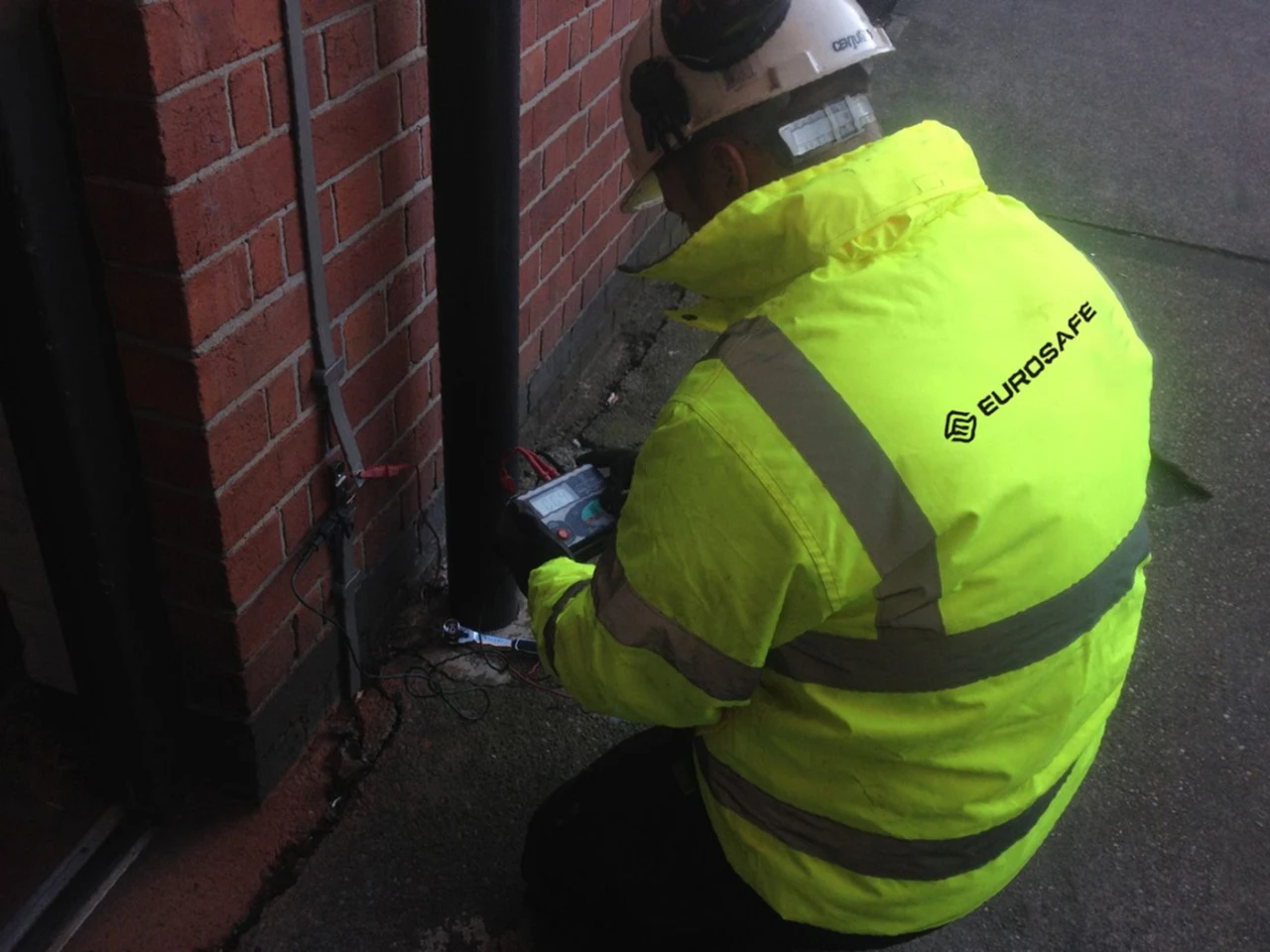
Regular lightning protection inspection and testing helps identify these issues and provides a record of the system's condition. Inspection may include visual examination of accessible components, continuity testing, earth resistance testing and assessment of the overall condition of the system.
Building alterations should also prompt consideration of the existing protection arrangements. Roof refurbishment, extensions, façade works, new rooftop plant, solar PV systems and communications equipment can potentially affect air-termination arrangements, separation distances or conductor routes.
Considering lightning protection during the planning stage can help ensure that changes do not compromise the existing system.
Lightning protection services from Eurosafe
Eurosafe provides specialist lightning protection services, including inspection and testing of existing lightning protection systems.
We also carry out remedial works and install lightning protection systems on existing buildings. In addition, Eurosafe now provides surge protection device (SPD) inspection and installation services, helping organisations protect electrical and electronic equipment against lightning-related surges.
Our engineers can assess existing systems, identify defects and remedial requirements, and help building owners and facilities managers understand the appropriate next steps.
If your lightning protection system is due for inspection, has not been tested recently, or your building has undergone significant alterations, contact Eurosafe to discuss your requirements.
Relates Services
Need advice on your lightning protection system? Our specialists can help you understand what the updated standard means for your building.