


- Knowledge Base
- Blog
- Lightning Protection Testing
Why Lightning Protection Testing is Essential for Building Safety?
As thunderstorms begin to loom on the horizon, it is crucial to ensure that your lightning protection system is functioning correctly and remains effective. Regular tests of lightning protection system can help identify damage, deterioration or faults that could affect system performance. Our professional service helps support ongoing lightning protection checks and provides greater confidence that your system is ready to protect your building and equipment.
If you need your lightning system tested, see our Lightning Protection Testing and Inspection service.
Our greater dependence on electronic devices in daily life and the effects of their damage, from office buildings to community libraries, increases the demand for lightning strike protection.
In order to ensure that buildings are secure, it is crucial to conduct regular lightning protection tests and inspections.
Lightning Checks Requirements
The Electricity at Work Regulations 1989, Regulation 4(2), requires electrical systems to be maintained to prevent danger. Regular lightning protection inspection and testing forms an important part of maintaining a lightning protection system and helping to minimise the risks associated with lightning strikes.
BS EN 62305 sets out the principles and requirements for protecting buildings and people against damage from lightning through the design, installation, inspection and maintenance of lightning protection systems.
As with any form of protection, it is the duty holder’s responsibility to ensure that lightning protection systems are regularly inspected, tested and maintained. Appropriate lightning protection compliance helps ensure that systems remain in suitable condition and continue to provide the intended level of protection.
Comprehensive Lightning Protection for Electrical Equipment
It is important to recognise that lightning protection and earthing systems alone cannot guarantee that electrical equipment will remain undamaged following a lightning strike. Effective lightning protection requires a comprehensive approach that considers both the direct and indirect effects of a strike.
Alongside a professionally installed and maintained lightning protection system, additional measures such as electromagnetic shielding, surge protection and effective earthing can help reduce the risk of damage to electrical and electronic equipment. Regular lightning protection inspection and lightning protection testing can also help identify issues with the system and support ongoing lightning protection compliance.
Professional Lightning Protection Inspection and Testing
Our extensive experience in working safely at height, combined with our specialist knowledge in lightning protection, enables us to provide a comprehensive nationwide lightning protection inspection and testing service.
As part of our lightning protection testing and inspection, we undertake:
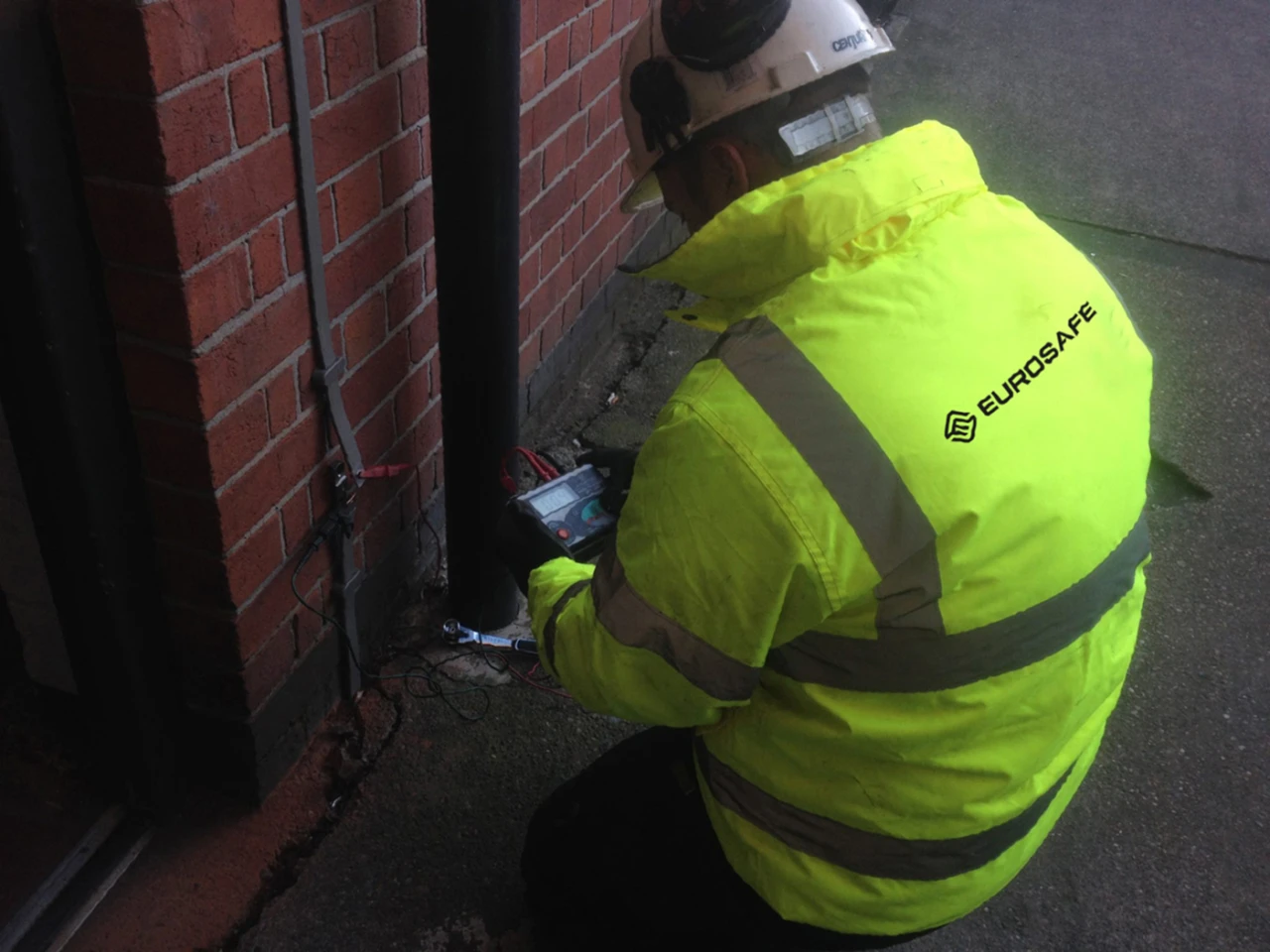
An earth resistance test using calibrated test meters at ground level, together with a visual inspection of the down conductors (affixed to the wall) for signs of damage or missing components, and continuity testing.
A visual inspection of the ‘airstrike’ components, which are the parts of the lightning protection system located on the roof of the structure where lightning is most likely to strike.
Our reassurance
Engineers can be exposed to fall hazards during the inspection/testing of roof-mounted components. It is therefore crucial to ensure engineers are trained and experienced in such areas. Eurosafe Solutions can assure you of the following:
That all our engineers are trained to work at height
That all our engineers are rescue trained
That our teams work in pairs whenever working at height to ensure rescue procedures can be undertaken safely
That all works will be completed safely in-line with current regulations and standards
Learn more about...