
- Products & PPE
- PPE Service Centre
PPE Service Centre
Keep your workforce protected and your equipment fully compliant with professional fall protection equipment servicing. Eurosafe provide expert inspection, servicing, maintenance and recertification for a wide range of height safety equipment, helping businesses reduce risk, minimise downtime and meet their legal obligations.
Whether you need support for a single site or a nationwide programme, our team delivers dependable servicing for fall arrest blocks, tripods, winches, harnesses, lanyards and associated height safety equipment.
We carry out servicing and repairs to the PPE of the following brands:

Our Fall Protection Equipment Servicing
Regular servicing of fall protection equipment is essential to maintain performance, extend product life and ensure equipment is ready when it is needed most. Our servicing solutions are designed for organisations working at height or in confined spaces that need a reliable partner for ongoing compliance and operational safety.
Safety harnesses and Lanyards, including restraint, work positioning and shock-absorbing lanyards
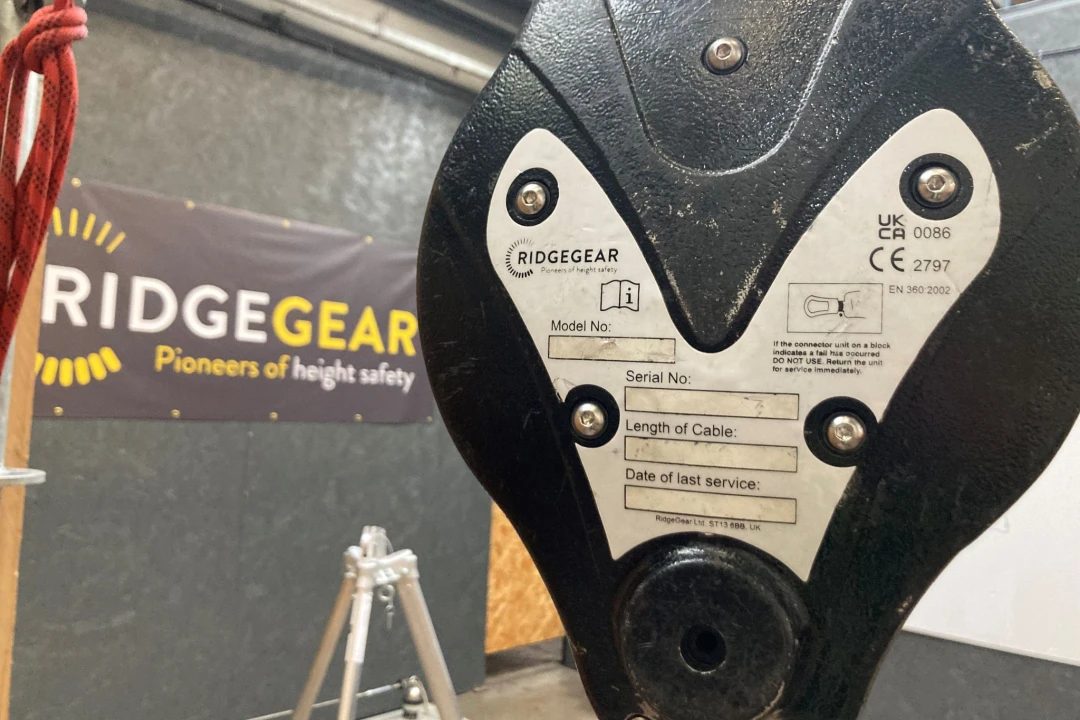
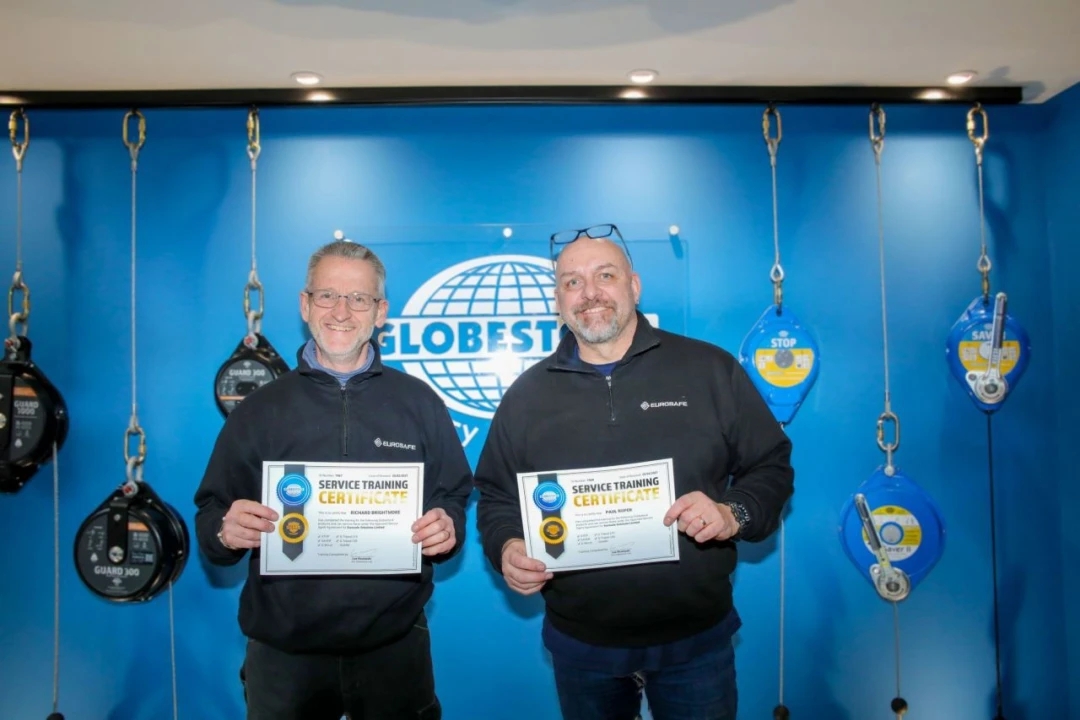
We are approved service agents for 3M, Globestock, MSA, IKAR and RidgeGear products.
What Our Servicing Includes
Our fall protection equipment servicing is carried out by competent professionals with experience across a broad range of work at height and confined space equipment. Depending on the product type and manufacturer requirements, servicing may include visual inspection, functional checks, cleaning, component assessment, maintenance, testing and recertification.
We help you identify wear, damage or performance issues before they become a safety risk, while providing the documentation needed to support your compliance procedures.
Stay Compliant and Audit Ready
If you own work equipment that is used to protect your employees from a fall from height, you have a legal duty to ensure that it is inspected at suitable intervals (Regulation 12 (3) of the Work at Height Regulations 2005). The inspection must be undertaken by a competent person, who has the relevant knowledge, training, and experience in the subject.
Servicing and inspecting fall protection equipment is a critical part of safe work at height management. UK duty holders must ensure equipment is maintained in a safe condition and, where applicable, thoroughly examined by a competent person at suitable intervals. Regular servicing supports compliance with work at height, PPE and lifting equipment requirements, while giving your team confidence that critical safety equipment will perform correctly in use.
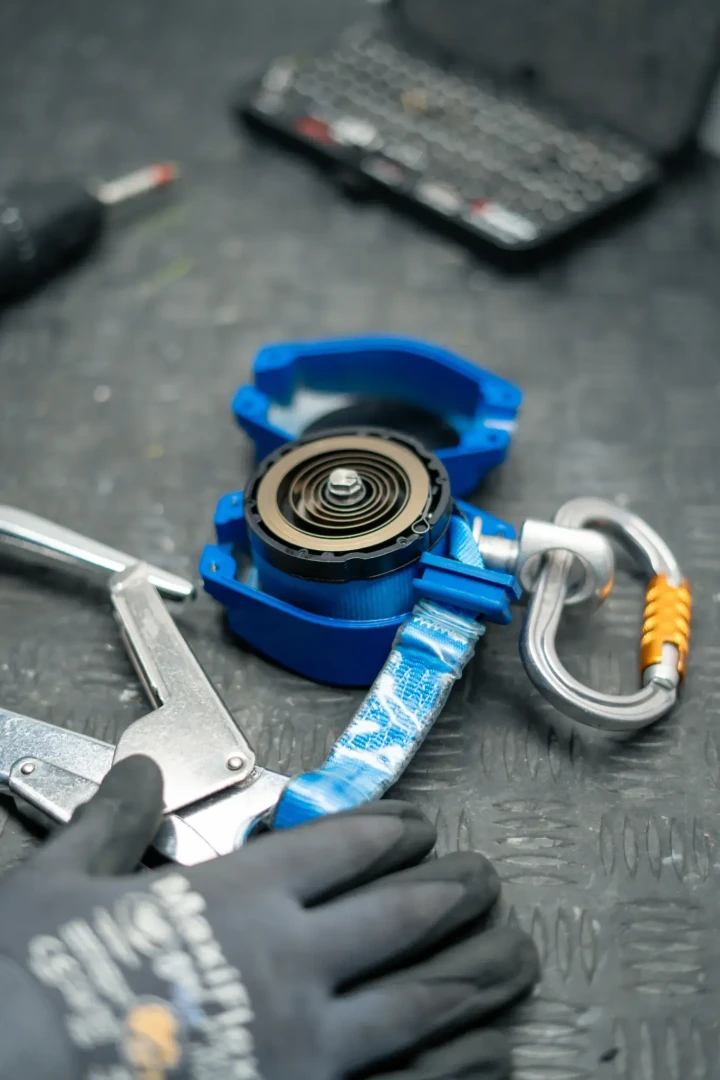
Benefits of PPE Servicing & Inspection
Protect your people with dependable, professionally serviced equipment
Reduce the risk of equipment failure and unplanned downtime
Support compliance with inspections, maintenance and record-keeping
Extend the working life of your height safety equipment
Streamline servicing across multiple equipment types and locations
Receive clear documentation to support audits and internal safety processes
If you need reliable servicing for fall arrest blocks, tripods, winches, harnesses and lanyards, we can help. Our responsive team supports businesses across a wide range of sectors with professional height safety servicing tailored to operational needs.
Get in touch to discuss your equipment, servicing intervals and site requirements, and let us help you keep your people safe and your compliance on track.
Legislation and Inspection Methodology
Inspection and servicing of fall protection equipment should be carried out within a documented regime based on the equipment type, manufacturer instructions, frequency of use and working environment. In the UK, the key legal framework typically includes the Work at Height Regulations 2005, the Personal Protective Equipment at Work Regulations, and, where lifting or rescue functions apply, the Lifting Operations and Lifting Equipment Regulations 1998 and the Provision and Use of Work Equipment Regulations 1998. Relevant product and inspection standards may also apply, including BS EN 365 for periodic examination of personal fall protection equipment, alongside product-specific standards for harnesses, lanyards, self-retracting lifelines, tripods and rescue lifting devices.
Pre-use checks by the user before each use
Formal periodic inspection by a competent person at suitable intervals
Additional interim inspections for high-use, harsh or contaminated environments
Identification and quarantine of defective equipment
Cleaning, maintenance and functional testing where permitted by the manufacturer
Clear records of inspection findings, equipment status and next due dates
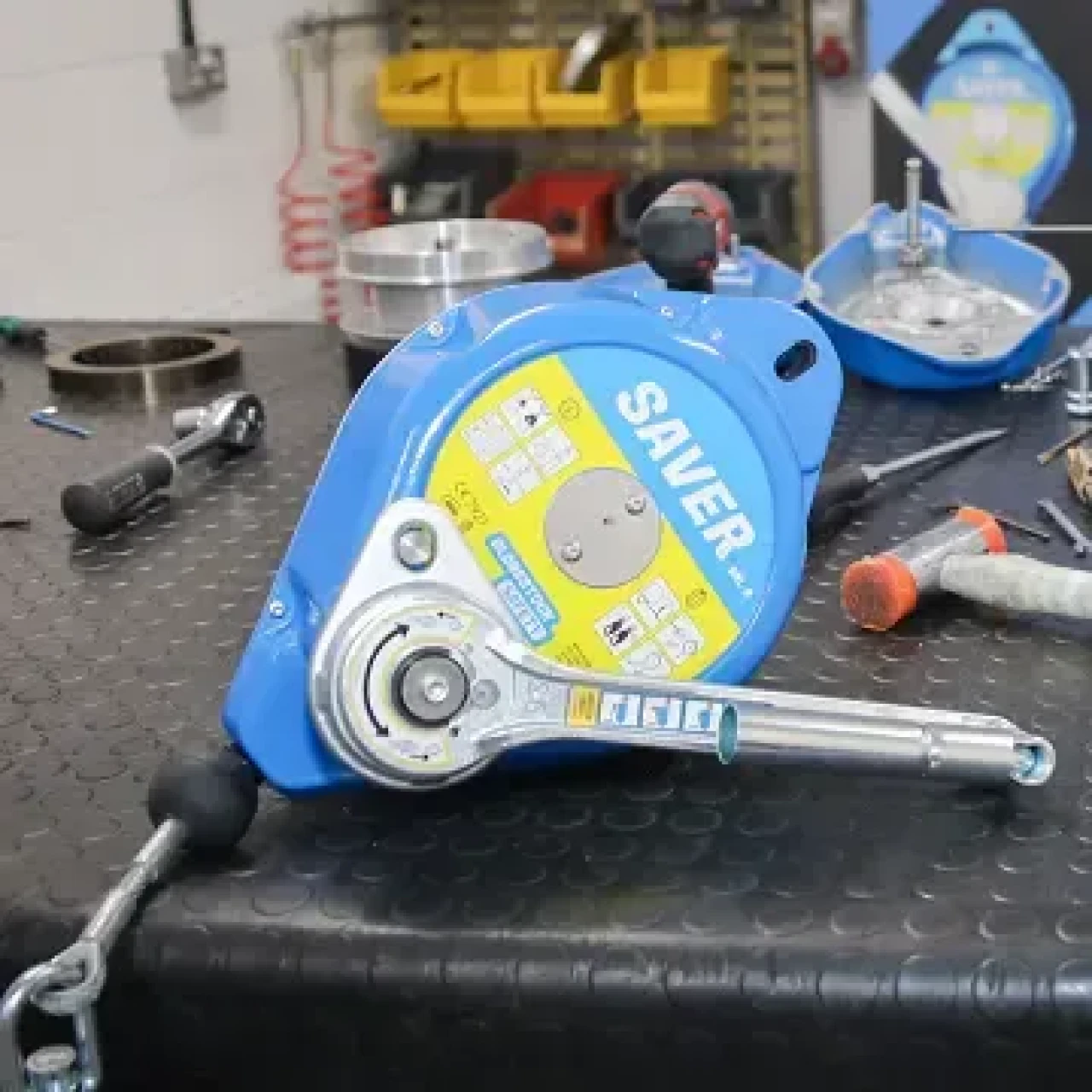
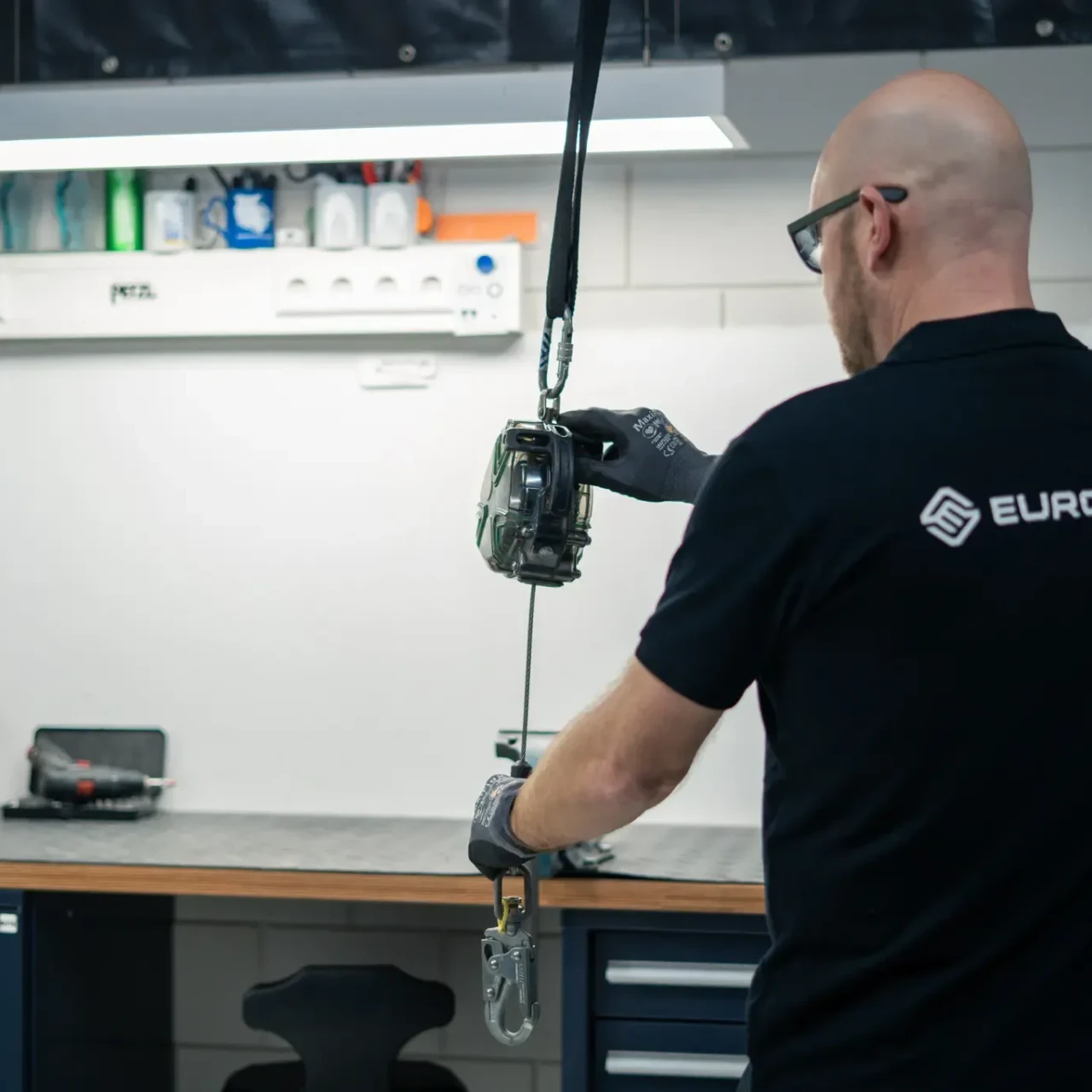
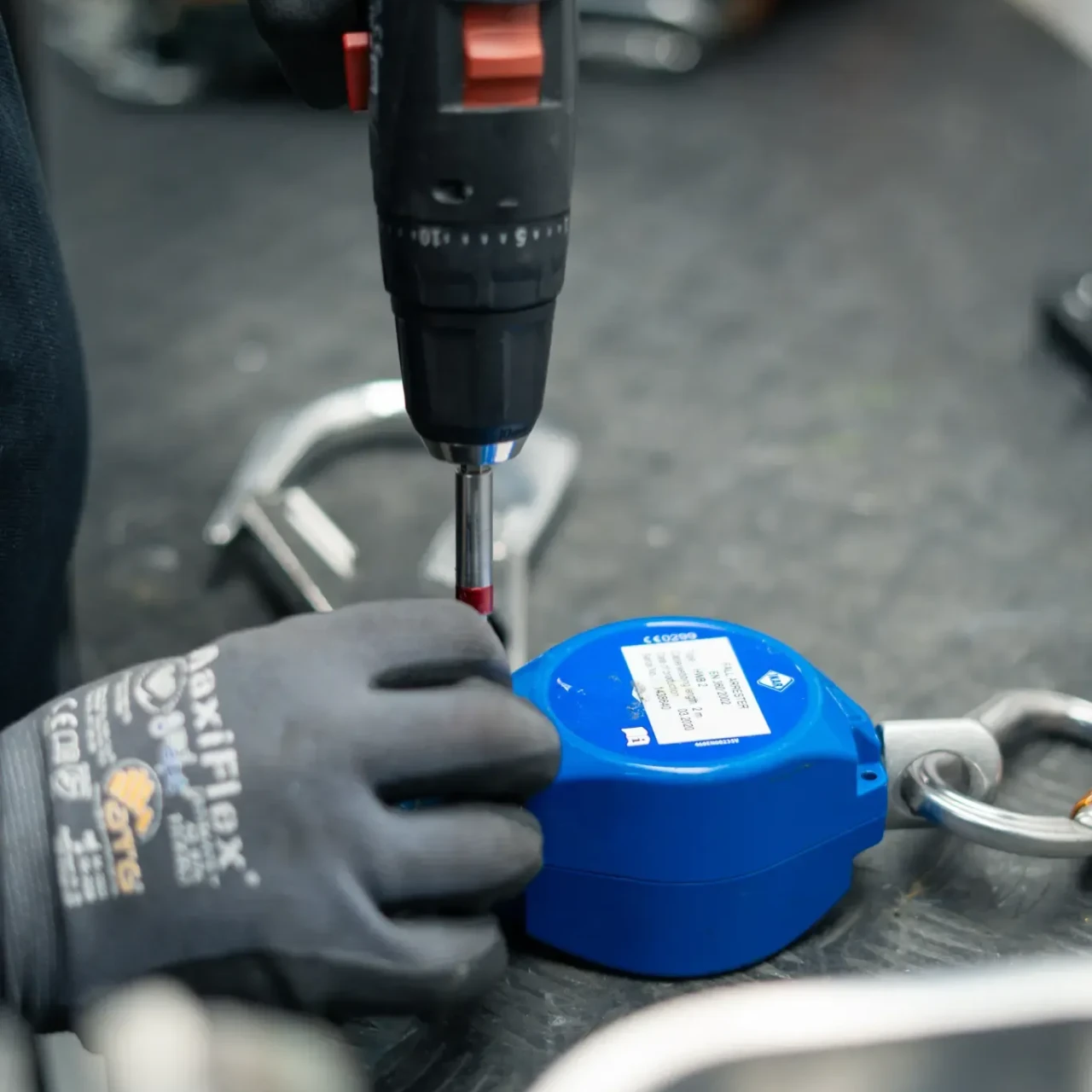
Fall Arrest Block (SRL) Inspection and Servicing
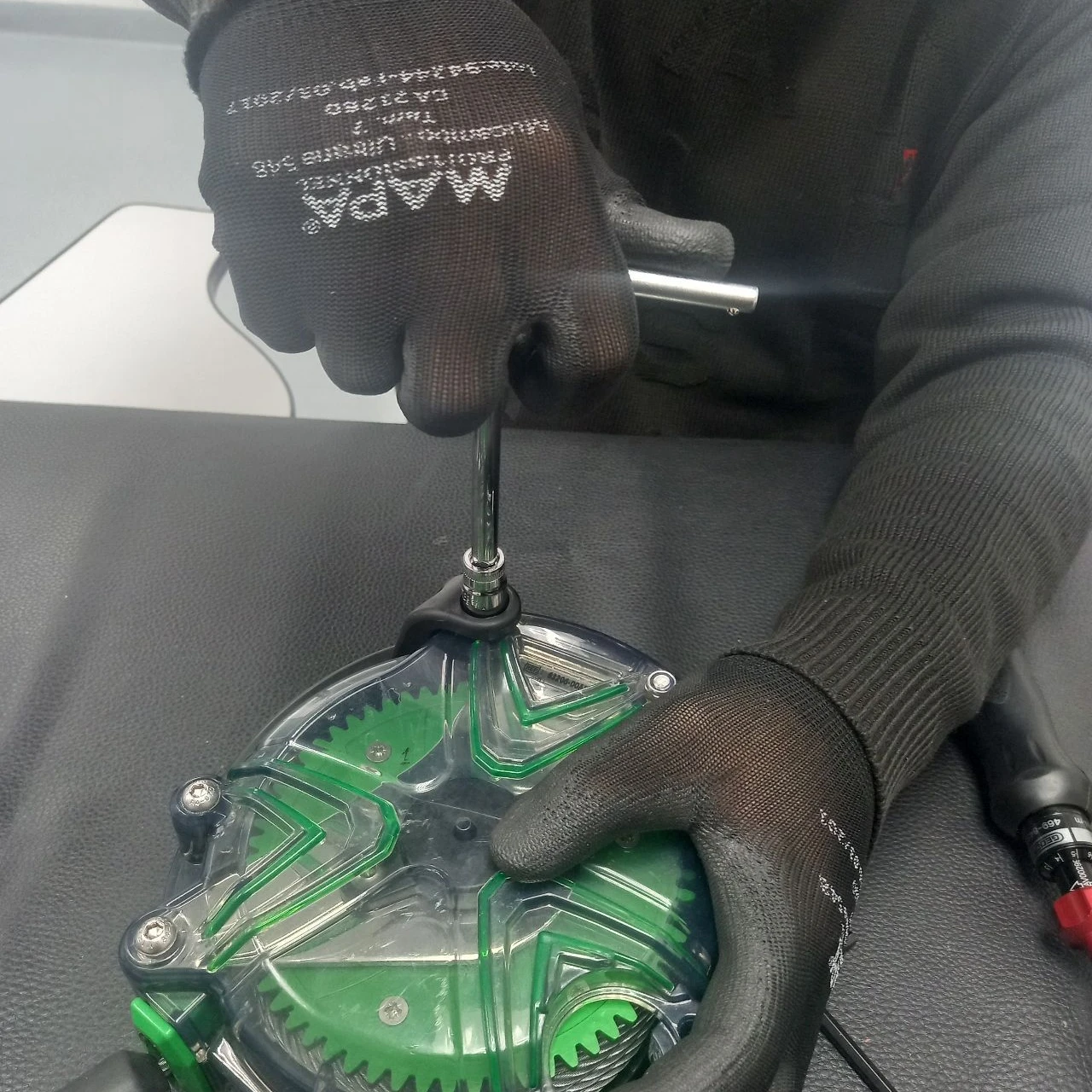
Fall arrest blocks, also known as self-retracting lifelines (SRL's), must be inspected and serviced to ensure the retraction and braking mechanisms operate correctly when needed.
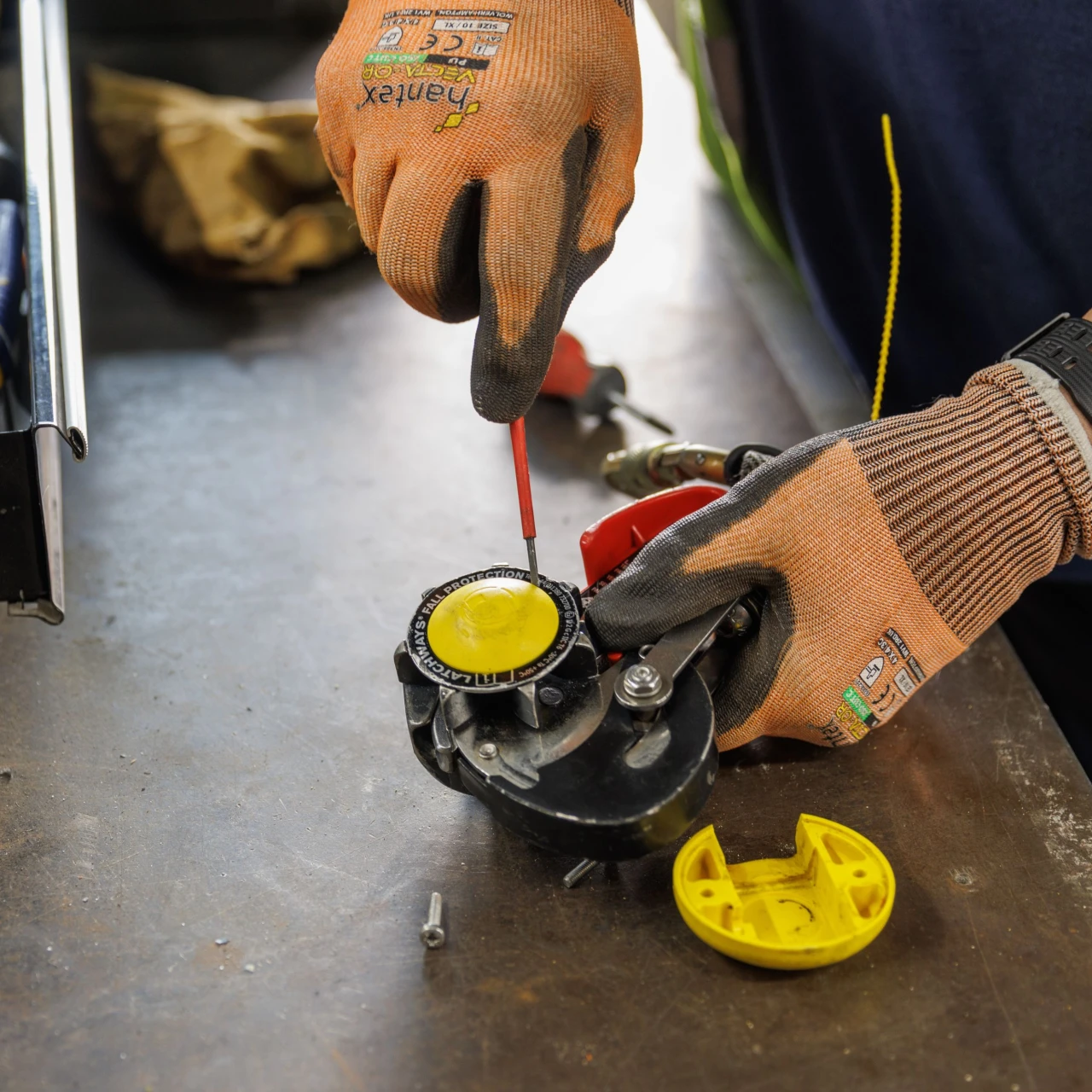
Our servicing approach typically includes examination of the casing, line or cable, connectors, swivel points, indicators, fastenings and end terminations, together with functional checks of retraction, locking and arrest performance where appropriate and permitted. Inspectors look for damage to the housing, corrosion, contamination, line wear, deformation, impact damage and any signs that the device has been subjected to a fall event or misuse. Devices with integral rescue or retrieval capability also require checks aligned to their additional function.
For fall arrest blocks, the legal and inspection framework will usually involve the Work at Height Regulations 2005, the Personal Protective Equipment at Work Regulations and BS EN 365 for maintenance and periodic examination, with product conformity commonly linked to BS EN 360 for self-retracting lifelines. Where a device also incorporates rescue lifting capability, BS EN 1496 may also be relevant.
In all cases, inspection methodology should combine pre-use checks, formal periodic examination and clear withdrawal-from-service criteria if damage, shock loading or unreliable function is identified.
Harness & Lanyard Inspection and Servicing
Safety harnesses and lanyards are a critical part of any personal fall protection system and must be kept in safe, serviceable condition.
Our harness and lanyard inspection and servicing process is designed to support compliance while helping clients identify wear, misuse and deterioration before equipment is returned to service.
Inspections typically include a detailed visual and tactile examination of webbing, stitching, labels, buckles, D-rings, adjusters and attachment points, with particular attention to cuts, abrasion, fraying, heat damage, chemical contamination, UV degradation, distortion and corrosion.
Harnesses and lanyards should also be checked for legibility of identification and traceability markings, as these are essential for record-keeping and lifecycle management.
HSE provide guidance on webbing and rope fall arrest equipment, and BS EN 365 for periodic examination. Product conformity may relate to standards such as BS EN 361 for full body harnesses, BS EN 354 for lanyards and BS EN 355 for energy absorbers, depending on the equipment configuration.
Users should carry out pre-use checks every time a harness and lanyard is worn, while formal recorded inspections should be completed by a competent person at suitable intervals based on risk, manufacturer guidance and site conditions. Where damage, loading, contamination or uncertainty exists, the harness and lanyard should be withdrawn from service immediately pending assessment.
Tripod Inspection and Servicing
Tripods used for confined space entry, retrieval and rescue must be inspected as structural and safety-critical systems, not just as standalone frames. Our tripod servicing process typically covers the head assembly, legs, locking mechanisms, feet, adjustment pins, brackets, labels and any integral attachment points. Inspectors assess for structural distortion, cracks, corrosion, excessive wear, missing components, insecure fittings and damage caused by transportation or misuse. Where the tripod forms part of a rescue or retrieval setup, compatibility with associated winches, fall arrest devices and mounting brackets should also be verified so the complete system is safe and fit for purpose.
Tripod inspection requirements are generally shaped by the Work at Height Regulations 2005, the Confined Spaces Regulations 1997, and, depending on configuration and use, PUWER and LOLER. Where a tripod is used as part of a lifting or rescue arrangement, the examination regime should reflect the lifting and rescue function as well as the structural condition of the frame. Inspection methodology may include visual examination, verification of locking and adjustment functions, confirmation of legibility of markings and compatibility checks with rescue lifting devices that may conform to standards such as BS EN 1496.
Winch & Recovery Device Inspection and Servicing
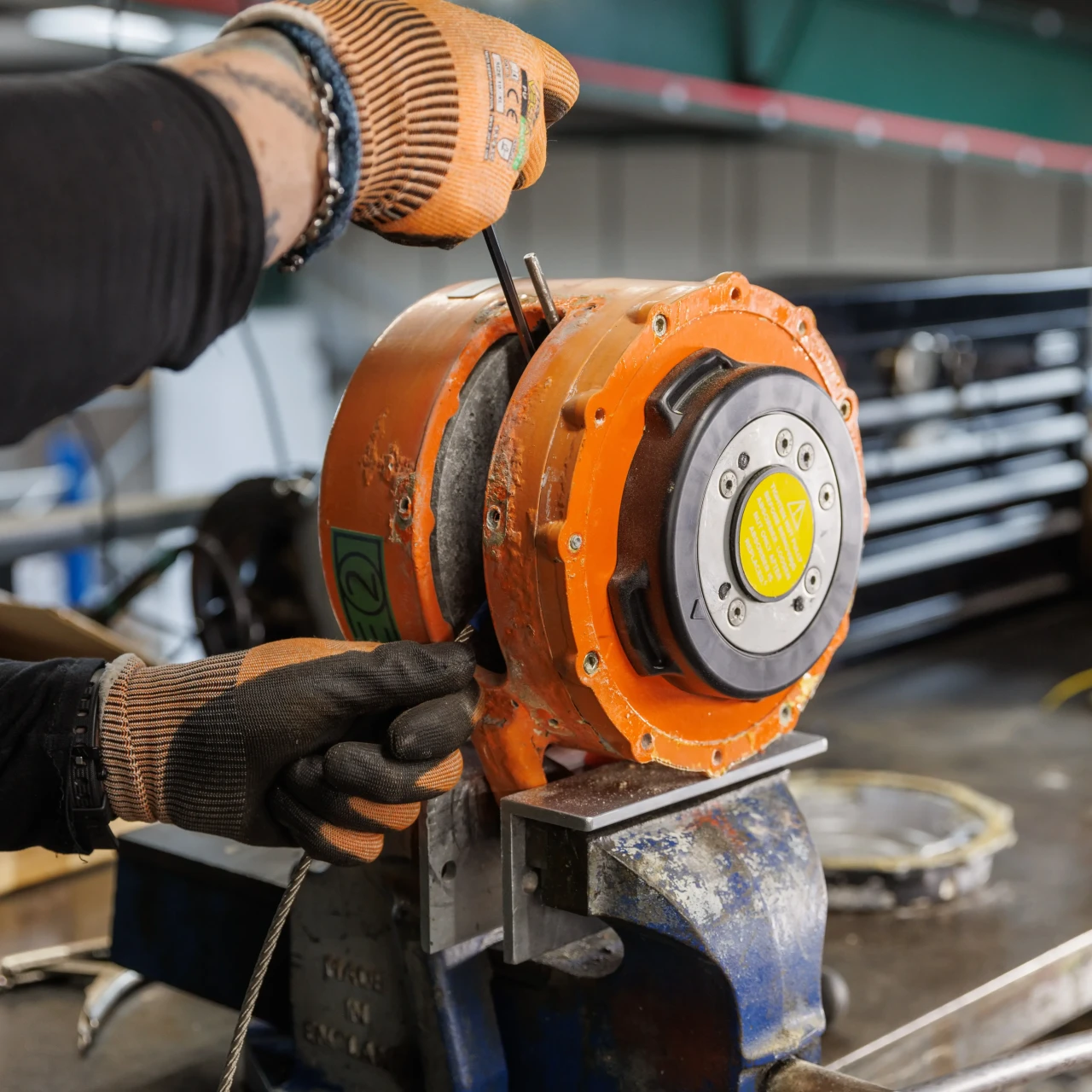
Winches and retrieval devices require a structured servicing process to ensure safe raising, lowering or recovery of personnel and equipment. Our inspection methodology typically includes checks on the housing, drum, cable or rope, terminations, handle or drive mechanism, brake function, locking devices, mounting arrangements and identification markings.
Functional testing is used to confirm smooth operation, controlled winding and reliable braking, while visual inspection identifies wear, broken wires, corrosion, crushed sections, distortion, contamination or signs of overload. Particular care is taken where the winch is used in rescue applications, as performance and compatibility are critical in emergency situations.
Winches may fall under different legal duties depending on whether they are used for lifting, lowering, pulling or rescue. In practice, this often means consideration of PUWER for general work equipment and LOLER, where lifting operations or lifting equipment duties apply. For rescue lifting devices, relevant product standards may include BS EN 1496.
Inspection intervals, load-related checks and reporting requirements should be set by a competent person with due regard to manufacturer instructions, application, environment and the consequences of failure.
FAQs
Fall protection equipment servicing is the inspection, maintenance, testing and recertification of equipment used to protect workers at height or during confined space operations. This includes fall arrest blocks, self-retracting lifelines (SRLs), harnesses, lanyards, tripods, winches and rescue devices. Regular servicing helps ensure equipment remains safe, compliant and fit for use.
Simply contact Eurosafe with details of your equipment, locations and servicing requirements. Our team can advise on inspection intervals, compliance obligations and the most efficient servicing programme for your organisation. You can email your enquiry to us directly at: servicing@eurosafeuk.com
Inspection frequency depends on the equipment type, manufacturer guidance, working environment and frequency of use. Users should carry out pre-use checks before every use, while formal inspections should be completed by a competent person at least every 12 months. Equipment used in harsh or high-use environments may require more frequent inspections.
Fall protection equipment should be inspected by a competent person with the appropriate training, knowledge and experience. Competent inspectors must understand the relevant legislation, inspection standards and manufacturer requirements for the equipment being examined.
Eurosafe services a wide range of height safety and confined space equipment, including:
Fall arrest blocks and self-retracting lifelines (SRLs), including sealed SRL’s
Shock-absorbing, restraint and work positioning lanyards
Rescue and retrieval devices
Eurosafe is an approved service agent for several leading manufacturers, including:
We can advise on servicing requirements for specific products and equipment ranges.
Servicing helps identify wear, damage, contamination, corrosion and performance issues before they become safety risks. It also supports compliance with UK work at height regulations and helps ensure equipment performs correctly during an emergency.
Relevant UK legislation may include:
Work at Height Regulations 2005
Personal Protective Equipment at Work Regulations
Provision and Use of Work Equipment Regulations 1998 (PUWER)
Lifting Operations and Lifting Equipment Regulations 1998 (LOLER)
Confined Spaces Regulations 1997
Specific standards such as BS EN 365 may also apply depending on the equipment.
A fall arrest block service typically includes inspection of the housing, cable or webbing replacements, connectors, braking mechanisms, locking systems, indicators and attachment points. Functional testing may also be carried out to verify correct operation where permitted by the manufacturer.
Harness inspections involve a detailed visual and tactile examination of webbing, stitching, buckles, D-rings, labels and adjustment points. Inspectors look for cuts, abrasion, UV damage, chemical contamination, heat damage, corrosion and signs of loading or misuse.
Some equipment can be repaired depending on the manufacturer's guidance and the nature of the damage. Equipment that has been subjected to a fall event, significant damage or excessive wear may need to be permanently withdrawn from service.
Replacement intervals vary depending on manufacturer recommendations, frequency of use, storage conditions and inspection results. Equipment should always be removed from service if it fails inspection or shows signs of damage that could affect safety.
Yes. Confined space tripods should be inspected regularly to ensure their structural integrity and safe operation. Inspections typically include the legs, head assembly, locking mechanisms, feet, mounting brackets and attachment points.
Many winches and rescue devices may fall under LOLER requirements when used for lifting or rescue operations. Inspection and servicing requirements should be determined based on the equipment's intended use, manufacturer instructions and applicable legislation.
Following inspection or servicing, organisations typically receive documentation detailing the inspection findings, equipment status, any repairs undertaken, certification where applicable and the next recommended inspection date.
Yes. Eurosafe supports organisations with single-site requirements as well as nationwide servicing programmes, helping businesses maintain compliance, standardise inspections and reduce administrative burden across multiple locations.
Equipment should be withdrawn from service immediately if it shows signs of:
Cuts, tears or frayed webbing
Corrosion or excessive wear
Structural deformation
Missing components
Failed locking or braking mechanisms
Chemical contamination
Evidence of shock loading or a previous fall event
A competent person should assess the equipment before any decision is made regarding repair or disposal.
A competent person is someone who has the necessary training, practical experience and technical knowledge to inspect, assess and determine the safety and continued suitability of fall protection equipment in accordance with manufacturer instructions and relevant standards.
Many manufacturers recommend annual servicing and inspection of self-retracting lifelines (SRLs), although the exact interval should follow manufacturer guidance, usage levels and risk assessments. High-use equipment may require more frequent examination.
PPE recertification may include inspection, testing, maintenance, replacement of approved components where permitted, documentation review and confirmation that the equipment remains suitable for continued use in accordance with manufacturer requirements.
Simply contact us on servicing@eurosafeuk.com with details of your equipment, locations and servicing requirements. Our servicing team can advise on inspection intervals, compliance obligations and the most efficient servicing programme for your organisation.

Contact us
For more information about our PPE Servicing or to request a free quote please