
Working in Confined Spaces
Confined Space Entry: Medium Risk & Entry Controller (CSC09)
Eurosafe Certificate
2 days
375,00
2 - 8 persons
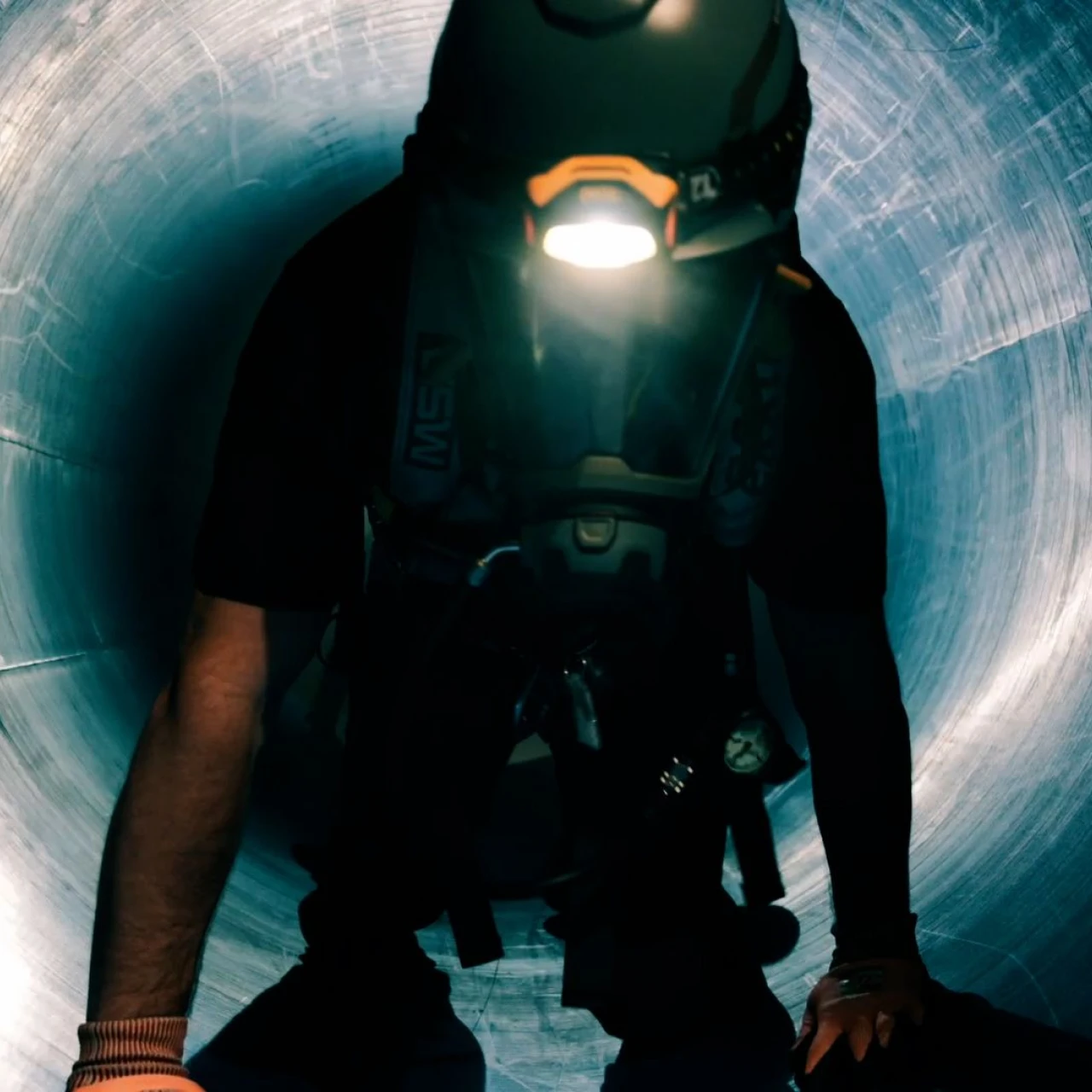
This course is about working in confined space environments where there is a reasonably foreseeable chance that a specified risk may be present. It will require the use of escape breathing apparatus. It will involve the presence of one of more people, positioned outside of the confined space, who have designated responsibilities for controlling the entry and dealing with emergencies.
This course can be delivered in one of our training centres or on your site using our Mobile Training Unit.
Course Accreditations and Reviews



Course Certification
| Certificate Type | Eurosafe Certificate |
|---|---|
| Validity | 3 years |
| City & Guilds | L2 6160-09 available |
| Energy & Utility Skills | Assured against National Occupational Standards |
| Requalification | For those who have already completed the 2-day CSC09 course or an equivalent, a 1-day re-assessment course (CSC09R) is available to refresh and reassess their knowledge. |
Course Overview
Definition of a confined space (HSE, C&G, Water UK NC1-NC4 classifications)
Specified risks
Duties under the regulations, preventing the need for entry
Risk assessment and hazard identification
Atmospheric hazards and gases
Principles and use of gas detectors
Safe systems of work and permits to work
Roles, responsibilities, and entry controller duties
Selection, adjustment and use of access equipment and PPE
Inspection and use of escape breathing apparatus / response to emergency
Control of safe entry and exit of entry team
Prepare to work safely in medium risk confined spaces
Enter and exit medium risk confined spaces safely
Prepare and use the escape breathing apparatus in accordance with the manufacturer’s instructions
Use equipment and tools safely, and in accordance with the manufacturer’s instructions
Follow procedures and work safely
Deal with emergencies
Use appropriate behaviour when working in medium risk confined spaces
Understand legislation governing working in medium risk confined spaces
Apply appropriate industry specific knowledge for working in medium risk confined space
Direct observation of an entry into a medium risk confined space
Written test in line with the National Occupational Standards
A 1-day re-assessment course (CSC09R) is available for those who have previously completed this course or an equivalent. Candidates are eligible to attend the refresher course for up to 6 months after the expiry of their previous certification.
Course Overview Download
Who will be delivering this training?
Course Reviews

"Great course with practical implications and challenges, very engaging."
- Robbie B
"Excellent trainer, went I to depth and taught us everything there is to now perfectly"
- Ben A
"Trainer very good, mood light and showed interest in our issues, able to support with our concerns and suggest where to look for further info."
- Peter D
"Great instruction and delivery of the content. Very engaging and made the theory side interesting and understandable. Practical was very good."
- Dan L
FAQs
A medium risk confined space is an enclosed area where there is a reasonably foreseeable possibility of a specified risk being present, such as hazardous atmospheres, trapped gases, flooding, fire, or restricted movement. These risks can be controlled through suitable risk assessments, safe systems of work, trained personnel, and appropriate equipment.
This course is suitable for operatives, technicians, engineers, maintenance personnel, utility workers, and supervisors who are required to enter medium risk confined spaces or act as an Entry Controller.
An Entry Controller is responsible for controlling access to the confined space, monitoring entry and exit procedures, ensuring permits and safety controls are in place, maintaining communication with entrants, and initiating emergency procedures if required.
Successful delegates will receive a City & Guilds accredited qualification in Working in Medium Risk Confined Spaces and Entry Control, demonstrating competence in accordance with recognised industry standards.
Yes. The City & Guilds qualification is widely recognised throughout the UK and is accepted across many industries including utilities, construction, facilities management, manufacturing, and water treatment.
No prior confined space qualification is normally required. However, delegates should be physically capable of undertaking practical training exercises and working in confined space environments.
Yes. Delegates who have previously completed the CSC09 course, or an equivalent qualification, can attend the 1-day CSC09R re-assessment course to refresh and reassess their knowledge and practical skills.
Yes. Delegates will learn how to inspect, prepare, and use escape breathing apparatus safely in accordance with manufacturer instructions and industry best practice.
Practical training includes safe entry and exit procedures, gas detection, equipment inspections, harness fitting, use of escape breathing apparatus, communication procedures, emergency response, and Entry Controller responsibilities.
Yes. Training can be delivered at your premises using our Mobile Training Unit, allowing delegates to complete practical exercises in a realistic training environment without travelling off-site.
Low risk training covers confined spaces with minimal foreseeable risk. Medium risk training includes environments where specified risks may be present but can be controlled through safe systems of work. High risk training is intended for more hazardous environments where complex rescue arrangements and specialist breathing apparatus may be required.
Delegates should have a good understanding of workplace safety, be able to communicate effectively, and be medically fit to participate in practical confined space activities.
The course covers emergency procedures and escape breathing apparatus. However, it does not qualify delegates as a dedicated confined space rescue team. Separate rescue training courses are available for personnel responsible for rescue operations.
This qualification is commonly required within water and wastewater, utilities, construction, telecommunications, facilities management, manufacturing, energy, and infrastructure sectors.