
- Inspection & Maintenance
- Façade Access System / BMU Inspection
- Davit System Test & Inspection
Davit System Test & Inspection
Eurosafe provides a full Davit System Test & Inspection service. This includes examination, certification, and any maintenance works required, and a full testing service for installed and removable davit systems.
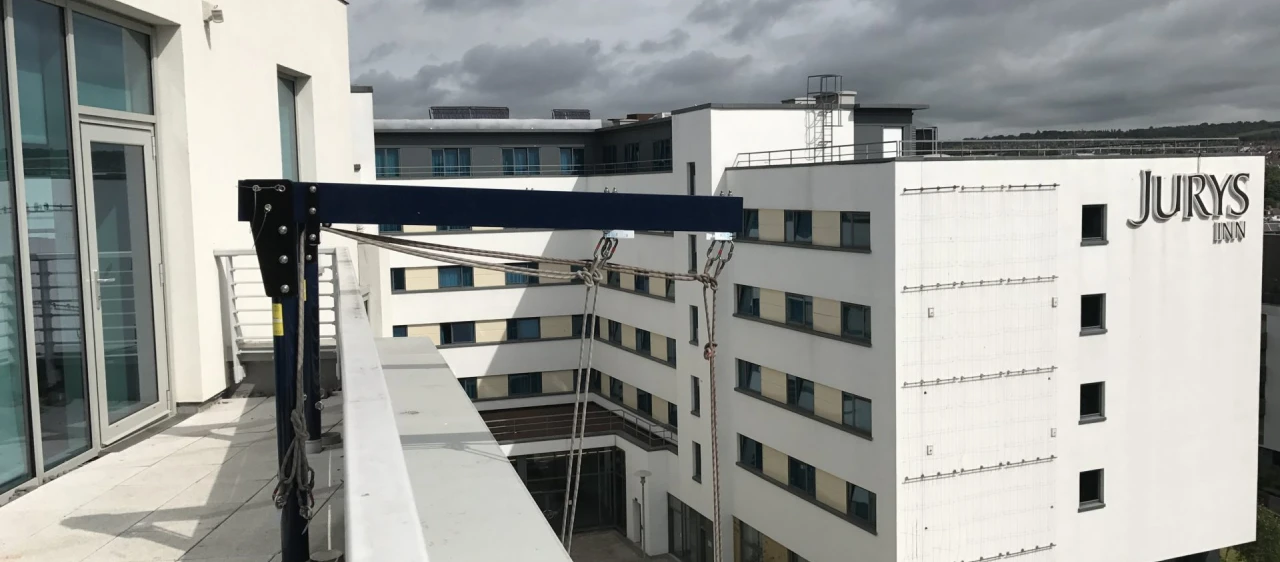
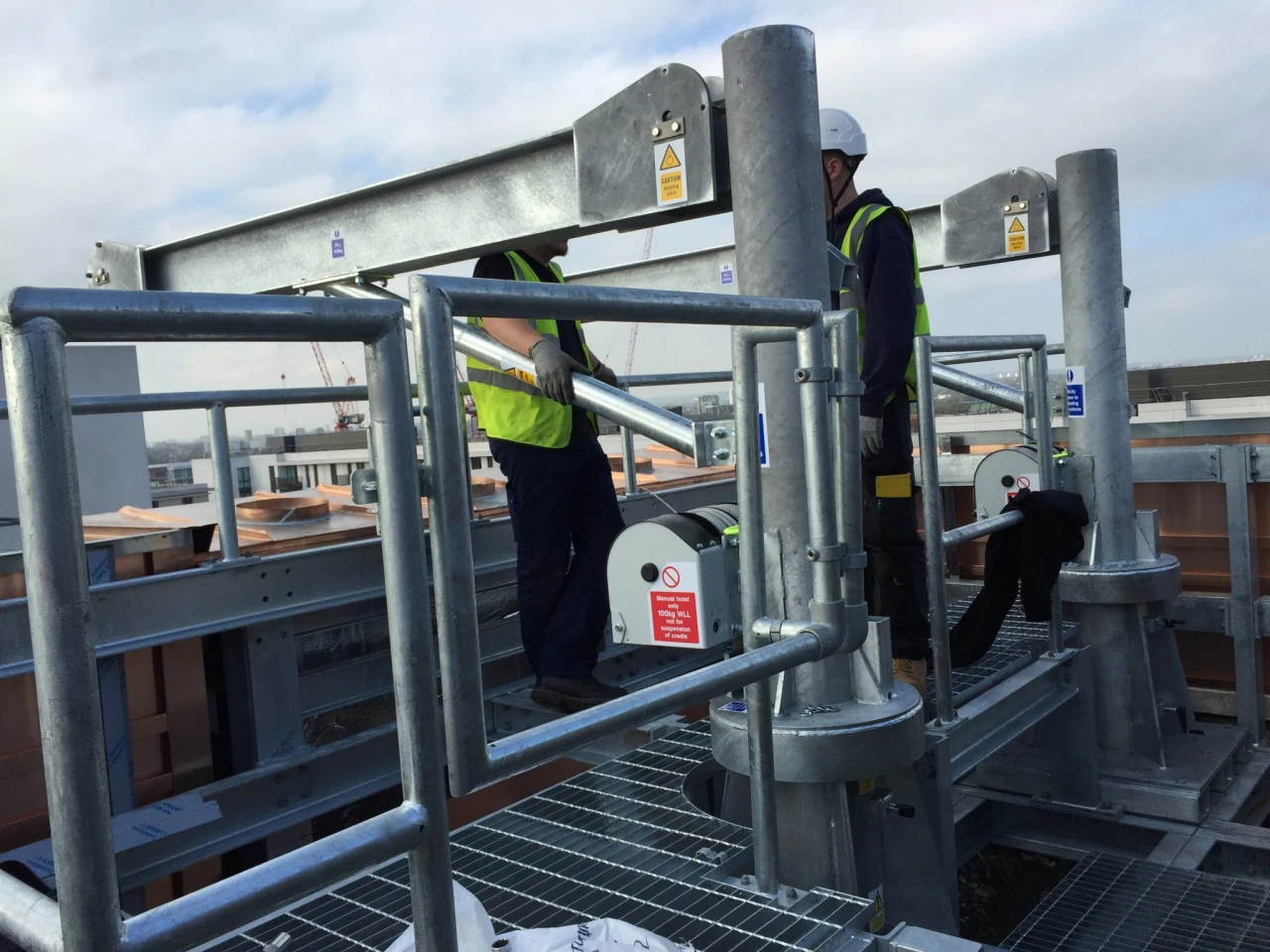
Davit systems are used where there is a requirement to suspend a load over a roof edge, parapet, or glazing system. A davit system typically takes one of two forms:
Permanent socket and temporary davit
Permanent davit
The majority of applications that we encounter are for the suspension of personnel in the form of either an abseil or cradle system. Due to the load which davit arms can support, it is required to have them inspected regularly.
Business responsibilities
The following standards are applicable when testing and inspection davit systems:
LOLER – in accordance with BS EN 795
BS EN 7985
BS EN 7883
It is the duty holder’s responsibility that the inspection, examination, maintenance, and testing are carried out and that reports are issued and retained.
Eurosafe is also able to ensure that all of the required davit inspection processes are carried out and that reports are retained on behalf of the duty holder.
Frequency of inspection
The Lifting Operations and Lifting Equipment Regulations 1998 (LOLER) place duties on people and companies who own, operate or have control over lifting equipment, including davit arms.
Inspections of davit systems must be carried out in accordance with LOLER recommendations. When the davit is used for raising and lowering goods and materials all lifting accessories should be inspected every 6 months and all other lifting equipment should be inspected every 12 months.
Under LOLER recommendations a bi-annual inspection is required when the davit system is installed in accordance with BS 8610:2017 to provide a suspension point for personnel to undertake work that requires industrial roped access or abseil.
When equipment and any associated accessories are used to lift people, davit system inspection should occur every 6 months as a minimum. The process of this examination is determined by the person carrying it out.
BS EN 7985 is the code of practice for the use of rope access methods for industrial purposes. This code of practice applies to davit inspection when the davit arm is installed to provide a suspension point for industrial roped access or abseil. Under BS EN 7985 the davit arm would require inspection on a 6-month basis.
Frequently Asked Questions
A davit system is a lifting device used to suspend loads over edges such as roofs, parapets, or glazing systems. It is commonly used for façade access, enabling personnel to carry out maintenance, inspection, or cleaning via rope access or cradle systems.
There are two main types of davit systems:
Permanent socket with a removable (temporary) davit arm
Fully permanent davit system
The appropriate system depends on building design, access requirements, and frequency of use.
Davit systems support personnel and equipment at height, making safety critical. Regular inspection ensures structural integrity, compliance with regulations, and safe operation. Failure to inspect can lead to serious safety risks and legal non-compliance.
Inspection frequency depends on usage:
Every 6 months - when used to lift people (e.g. rope access or abseiling)
Every 6 months - lifting accessories (e.g. harnesses, connectors)
Every 12 months - lifting equipment used for goods/materials
Where davits are used for rope access, inspections are typically required at least every 6 months.
Davit system inspection must comply with:
LOLER (Lifting Operations and Lifting Equipment Regulations 1998)
BS EN 795 (anchor devices)
BS EN 7985 (rope access code of practice)
BS 8610:2017 (design and installation of anchor systems)
These standards ensure equipment is safe and legally compliant.
The duty holder - typically the building owner, employer, or facilities manager - is responsible for ensuring inspections, testing, maintenance, and certification are completed and properly documented.
A full inspection service typically includes:
Thorough examination of davit arms and sockets
Load testing where required
Inspection of fixings and structural interfaces
Certification and compliance reporting
Identification and completion of any maintenance works
Yes. After inspection, a report and certification must be issued and retained. This documentation proves compliance with LOLER and relevant British Standards and must be available for audits or inspections.
Yes. Eurosafe can carry out inspections, testing, and maintenance, as well as manage documentation and reporting. This helps duty holders maintain compliance and reduces administrative burden.
If defects are identified, the system may be deemed unsafe for use until remedial works are completed. Eurosafe can provide recommendations and carry out necessary repairs to restore compliance and safety.
Yes. If a davit system is used as an anchor point for rope access or abseiling, it must be inspected at least every 6 months in line with BS EN 7985 and LOLER requirements.
Failure to inspect can result in:
Increased risk of accidents or falls from height
Legal penalties for non-compliance
Invalid insurance or liability cover
Operational downtime due to unsafe equipment
Request free quotation
Fill in the form below to request your free, no-obligation davit system inspection quotation.